
Industrial Construction Surveying Services in Australia
What Is Industrial Surveying?
Industrial surveying is a specialised branch of surveying focused on large-scale industrial facilities, heavy infrastructure, and complex construction environments such as mines, processing plants, refineries, rail yards, power stations, ports, and manufacturing plants.
Unlike standard land surveying, industrial surveying requires extreme precision, specialist equipment, and strong integration with engineering and construction workflows. Industrial surveyors work closely with engineers, contractors, and project managers to ensure that large mechanical, structural, and civil components are installed exactly where they need to be.
Industrial surveying is critical for projects where millimetres matter, such as aligning machinery, installing conveyors, positioning turbines, or constructing large steel structures.

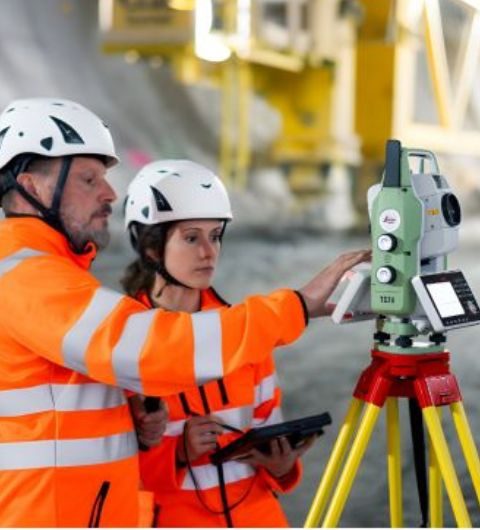
Why Industrial Surveying Is Important
Industrial facilities often contain complex systems that must align perfectly for the plant or infrastructure to function safely and efficiently.
Industrial surveying ensures:
- Accurate positioning of machinery and structures
- Correct alignment of mechanical equipment
- Compliance with engineering design tolerances
- Safe installation of heavy industrial components
- Precise integration of civil, mechanical, and structural elements
Even small surveying errors can lead to equipment failure, costly shutdowns, or structural issues, making precision surveying essential in industrial environments.
Common Industrial Surveying Services
Industrial surveying covers a wide range of services throughout the life cycle of a project.
Control Network Establishment
Creating a high-precision survey control network that forms the reference framework for all construction and installation work on site.
Structural and Steel Set-Out
Accurately positioning steel columns, structural frames, and anchor bolts during construction to match engineering design specifications.
Mechanical Alignment Surveys
Ensuring machinery such as turbines, conveyor systems, pipelines, and rotating equipment are aligned correctly to prevent operational problems.
As-Built Surveys
Recording the exact position of installed infrastructure or plant components to confirm they match design plans.
Laser Scanning and 3D Modelling
Using high-resolution laser scanners to capture existing facilities and create accurate 3D models for engineering, upgrades, and maintenance planning.
Deformation and Monitoring Surveys
Monitoring structures, machinery, or ground movement to detect settlement, vibration, or structural displacement over time.
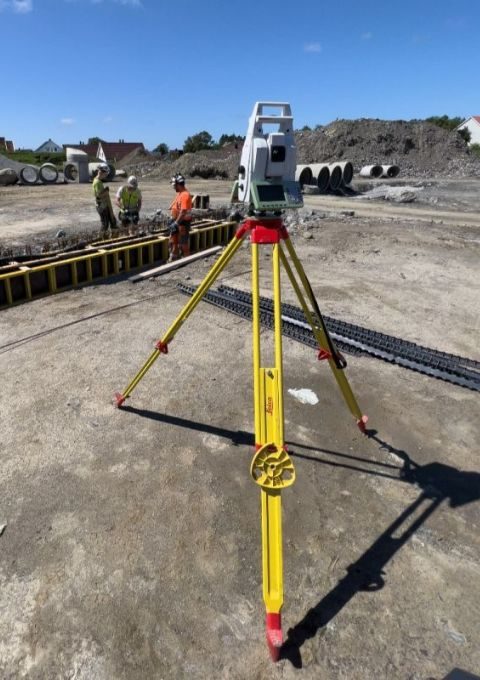

Where Industrial Surveying Is Used
Industrial surveying is commonly required in sectors such as:
- Mining and resource projects
- Oil and gas facilities
- Manufacturing plants
- Power stations and renewable energy sites
- Rail infrastructure and transport hubs
- Ports and shipping terminals
- Large-scale infrastructure projects
These environments often require surveyors who understand engineering tolerances, safety procedures, and complex construction sequencing.
Technology Used in Industrial Surveying
Industrial surveyors rely on advanced geospatial technology to achieve the required accuracy.
Common tools include:
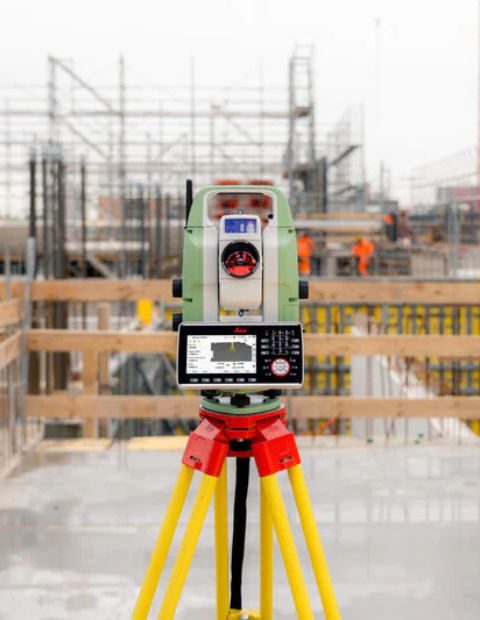
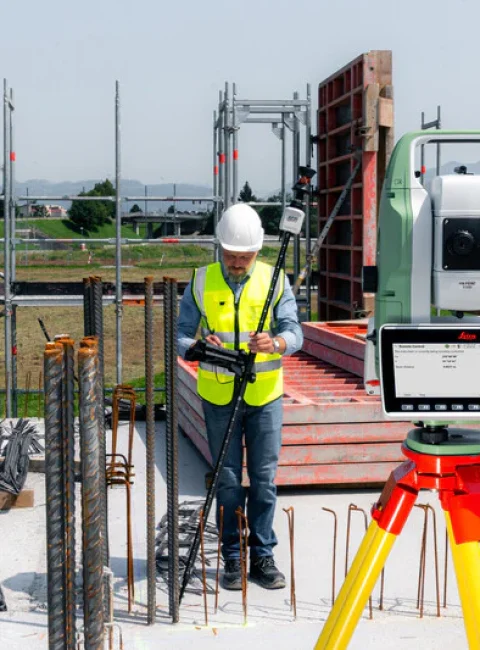
- High-precision total stations
- GNSS control systems
- 3D laser scanners
- UAV and drone mapping
- Digital construction models (BIM)
- Survey adjustment software
These technologies allow surveyors to integrate field measurements directly into engineering and construction models, helping teams detect issues early and avoid costly rework.
Industrial Surveying at 2Survey
At 2Survey, we support major infrastructure and industrial projects across Australia with precise surveying and spatial solutions.
Our team provides services including:
- Control network establishment
- Construction and engineering set-out
- Laser scanning and 3D modelling
- As-built surveys and verification
- Monitoring and deformation surveys
By combining modern geospatial technology with experienced survey professionals, we ensure that industrial projects are delivered with accuracy, efficiency, and compliance with engineering specifications.
Locations We Service
2Survey provides industrial construction surveying services in Australia, including:
- Melbourne
- Victoria (statewide)
- Brisbane
- Queensland
- Darwin
- Alice Springs
Our local teams offer scalable support for regional projects and multi-location industrial construction programs.
Ready to Get Started?
If you are planning an industrial or large-scale construction project, 2Survey is ready to support you with trusted and professional construction surveying services—from short-term site support to complete project survey management.
Request a Quote
Get in touch today to discuss your project requirements.

FAQs
What is construction surveying?
Surveying in construction is the procedure of measuring, locating, and validating positions at a construction site. Surveyors pass on design data to the ground, set control points, check alignments and levels, and ensure that structures are constructed correctly in accordance with safety and approved plans and specifications.
Is it worth paying a surveyor?
Yes, it is worth paying a professional surveyor, since proper measurements will help prevent construction errors, alignment issues, and rework, which is expensive. Having a qualified surveyor save your project by checking positions, boundaries and compliance, save time, money and possible conflicts in the course of construction and post construction.`
What do surveyors look for in a house?
The surveyors investigate property lines, building locations, site levels, and potential encroachments. They also determine adherence to approved plans, the structural location, and other aspects that could influence subsequent building, refurbishment, drainage, or legal possession of the property.
What is the role of a surveyor in the construction industry?
A surveyor gives proper positioning, control networks and verification during a project. They establish structures, alignment and leveling of checks, composition of engineers and contractors, and provide stable data to comply, assure quality, and produce final as-built records.
How much to pay for a surveyor?
The price of a survey depends on the size of the project, the condition, and the type of survey. Small residential surveys tend to be lower in cost. In contrast, industrial or infrastructure projects tend to be more costly because they are complex, require more equipment, and entail greater reporting requirements. You should always demand a detailed quote in accordance with your project scope.