Modern transportation depends entirely on railways. Each day, millions of citizens use trains to go to work, move between cities, and transport goods over great distances. However, behind all straight journeys, straight tracks and precisely timed rail works, there is an organization of professionals laboring quietly to ensure it all remains: rail infrastructure surveyors.
These are vital workers in the construction, maintenance and enhancement of the rail systems upon which we rely. Any minor mistake during surveying may lead to delays, safety concerns, or costly fixes if not adequately addressed. This is why surveyors of rail infrastructure are the real support for safe and efficient railway systems.
The Knowledge on the role of rail infrastructure Surveyors
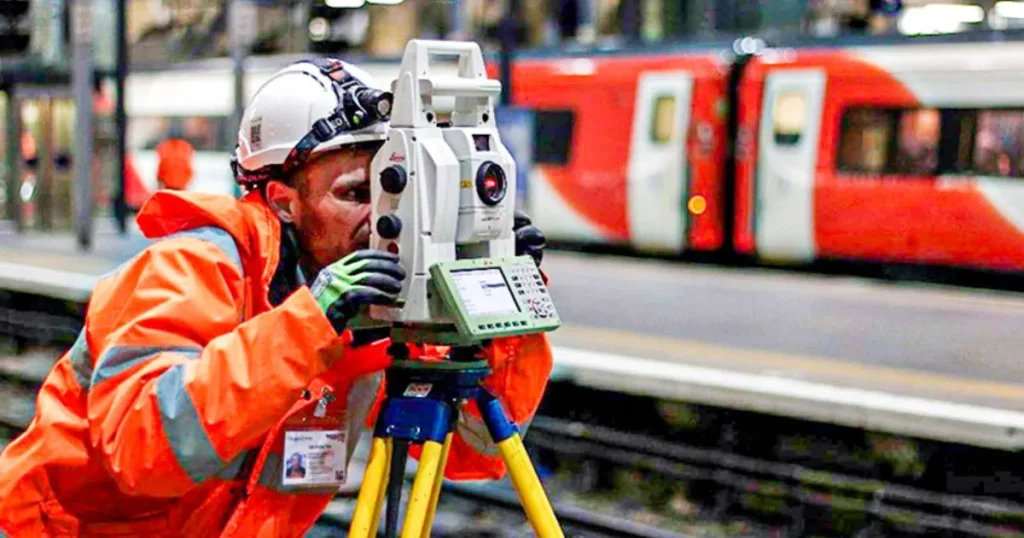
Rail infrastructure surveyors are experts in gathering accurate information about land, land topography, and the structures supporting rail systems. Their work assists engineers in designing rail lines, analyzing the risks, and implementing the engineering projects accurately.
From initial project planning through to final delivery, surveyors ensure that each meter of track is mapped correctly. They collaborate with road and rail surveying teams and can integrate land analysis with the latest digital instruments to deliver credible findings.
The Reason Rail Infrastructure Surveyors are Important in Current Rail Projects
When rail networks are considered the veins of a country, the heartbeat of a nation is the surveyors. The reason why their role is more significant than ever is as follows:
1. Safe Track Alignment
To ensure tracks are straight, rail infrastructure surveyors measure distances, gradients, and land levels to keep them perfectly aligned. It does not take much to influence the stability of the trains. Their accurate data will help prevent derailments, structural failures, and long-term damage.
2. Proposing Smarter, Faster Engineer Decisions
With precise maps, three-dimensional models, and an online plan, engineers can have a clear vision of the location before construction even starts. This makes risks less, costs lower, and decreases the delivery time of a project, particularly in large infrastructure projects such as:
- New rail line construction
- Rail corridor upgrades
- Bridge and tunnel expansion
- Duplication and realignment of tracks.
3. Application of the newest technology
The current rail infrastructure surveyors make use of the following tools:
- Drones for aerial mapping
- Laser scanning (LiDAR) of terrain detail.
- High-accuracy positioning of GPS and GNSS.
- Software to model project plans in 3D.
These technologies enable surveyors to be more efficient and deliver the most precise results, even in remote or complex areas.
The Relationship between Road and Rail Surveying
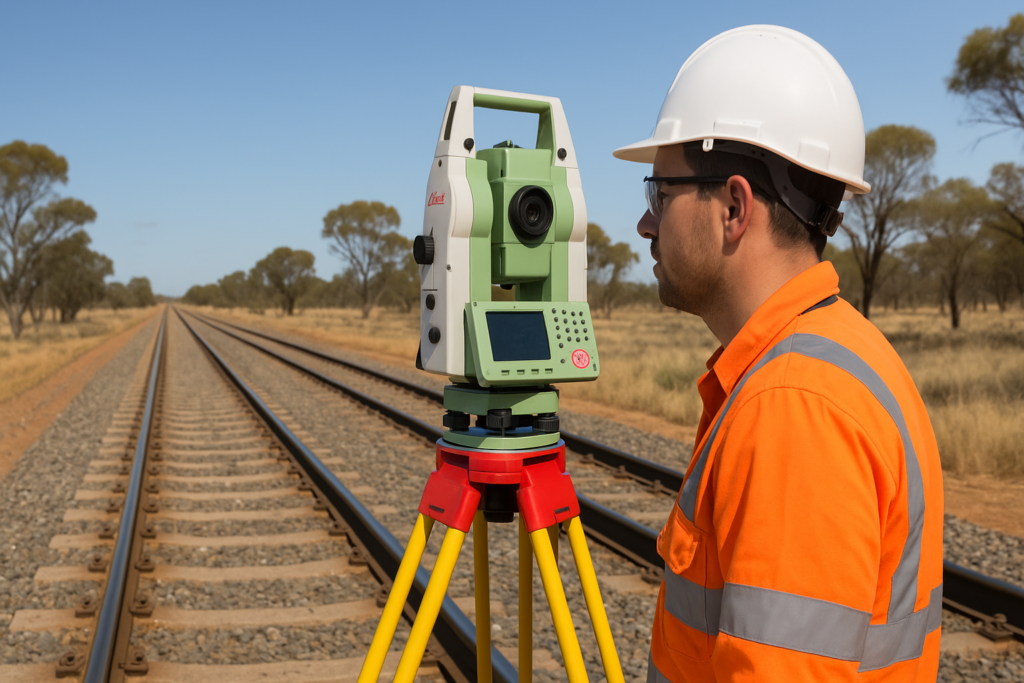
Whereas the rail surveying concentrates on tracks and corridors, the road and rail surveying usually complement each other – particularly in large-scale engineering projects. Roads, rail lines, and bridges may also be placed on the same land, and therefore, the surveyor must ensure that the two systems are well aligned. In major metropolitan transport corridors, surveyors Melbourne infrastructure authorities rely on play a critical role in coordinating complex rail and road integrations while meeting strict compliance and safety standards.
Companies such as 2Survey, which is well-versed in its operations in the engineering and transport sectors, specialize in developing seamless interconnections between road and rail networks. This hybrid solution enhances planning, minimizes mistakes, and helps create safer travel systems overall.
Surveyors’ Activities at Each Phase of a Rail Project
The rail infrastructure surveyors are involved in the project throughout the entire process, from sign-off. They usually involve themselves in:
1. Feasibility and Planning
The surveyors evaluate the land to find out whether it is capable of supporting rail infrastructure. They check:
- Terrain conditions
- Soil levels
- Land boundaries
- Possible structural obstacles.
The engineers can use this information to select the most favorable route.
2. Design and Engineering
Through precise measurements, surveyors develop maps and digital models—these direct engineers when designing tracks, bridges, tunnels, and drainage systems.
3. Construction Support
Surveyors during construction:
- Mark the exact track positions
- Ensure alignment with approved plans.
- Survey earthworks and buildings.
- Adjust measurements where necessary.
This provides that no step falls behind schedule- literally.
4. Maintenance and Upgrades
Rail infrastructure requires constant attention. The surveyors carry out regular inspections to identify an early indication of:
- Ground movement
- Track wear
- Structural shifts
- Drainage issues
The maintenance teams use their reports to correct issues before they arise.
Major advantages of the recruitment of professional Rail Infrastructure Surveyors
The collaboration with experienced surveyors is associated with significant benefits:
- Better safety: Data will be accurate, reducing risks.
- Cost effectiveness: The number of errors is reduced, resulting in minimal cost corrections.
- Rapid construction: Planning hastens construction.
- Improved assets: Long-term maintenance maintains railways in good health.
Technically highly skilled firms, as demonstrated in their engineering survey and engineering project portfolios, have a strong knowledge base across numerous sectors, including transport, infrastructure, construction, and mining.
The Future of Transport is Rail Infrastructure Surveyors
Rail networks have to develop as cities develop and people need faster transportation. Surveyors are well-suited to modern rail work, which demands greater accuracy, more intelligent design, and more sophisticated technology.
Rail infrastructure surveyors ensure that every project is based on accuracy, whether it is the construction of high-speed rail lines, the improvement of regional networks, or the advancement of freight corridors.
Final Thoughts & Call-to-Action
Rail infrastructure surveyors play an essential role in creating safe, reliable, and efficient rail networks. Their expertise supports everything from planning new routes to maintaining existing systems. If your next project involves road and rail surveying, choosing skilled professionals is the key to successful delivery.
Looking for expert surveyors for your upcoming engineering or rail project? The connection with 2Survey stands out as a trusted leader in road and rail surveying, delivering precise, high-quality data for complex engineering and infrastructure projects. With advanced technology, experienced surveyors, and a commitment to accuracy, 2Survey ensures safer, smarter, and more efficient project outcomes. Whether it’s rail upgrades, construction support, or large-scale infrastructure planning, 2Survey provides reliable surveying solutions that keep every project on track. Contact us now!
Frequently Asked Questions
Rail infrastructure surveyors are specialists who gather precise data about land, topography, and structures that support rail systems. They measure distances, gradients, and land levels to ensure tracks are properly aligned. Their work spans the entire project lifecycle, from initial feasibility studies and design support to construction monitoring and ongoing maintenance inspections.
Surveyors ensure tracks are perfectly aligned and stable, which is critical for preventing derailments, structural failures, and long-term damage. Even minor measurement errors can compromise train stability and passenger safety. Their accurate data helps engineers make informed decisions that protect both infrastructure and lives.
Today’s rail surveyors utilize advanced technology including drones for aerial mapping, laser scanning (LiDAR) for detailed terrain analysis, and GPS/GNSS systems for high-accuracy positioning. They also use specialized 3D modeling software for project visualization. These tools enable them to deliver precise results efficiently, even in remote or challenging locations.
Road and rail surveying often complement each other in large-scale infrastructure projects where roads, rail lines, and bridges share the same land. Surveyors must ensure both systems are properly aligned and integrated. This coordinated approach enhances planning accuracy, reduces errors, and creates safer, more efficient transportation networks overall.
Professional surveyors provide enhanced safety through accurate data that reduces risks and cost-effectiveness by minimizing expensive errors and corrections. They enable faster construction timelines through efficient planning and improve asset longevity through proper maintenance monitoring. Experienced firms bring specialized knowledge across transport, infrastructure, construction, and mining sectors.